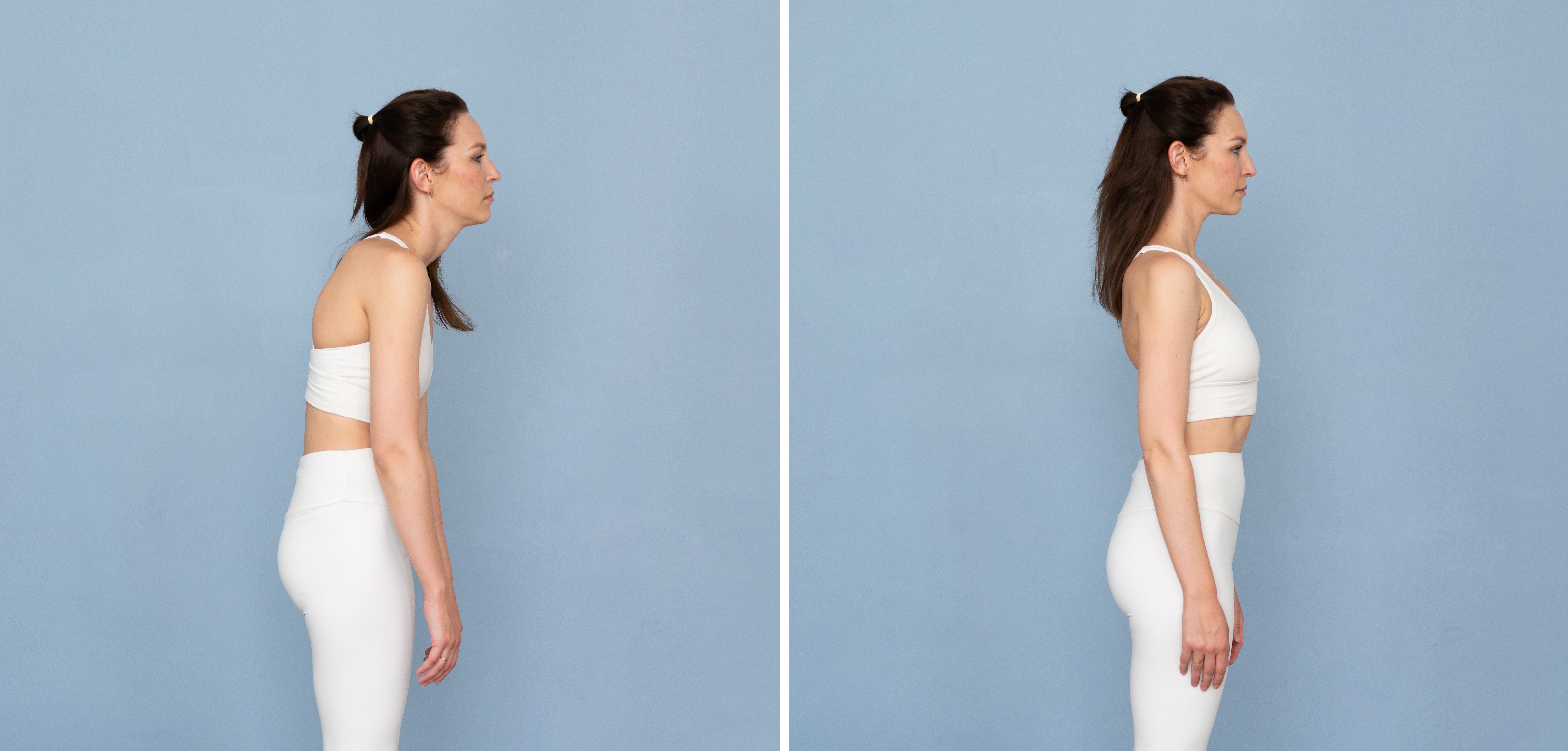
Correct posture means the position in which the spine is naturally aligned, and the head, shoulders, and pelvis are in balance. In this position, the muscles work efficiently, the joints are protected, and the body uses less energy to stand or sit.
Good posture reduces pressure on the intervertebral discs, decreases tension in the neck area, and helps breathing. Over time, posture influences energy levels, mobility, and the way the entire body moves.
Incorrect posture changes the way weight is distributed and leads to overuse of certain areas. The most affected are the cervical area, the lumbar area, and the shoulders. This is where pain, stiffness, and muscle fatigue appear.
Posture is formed by daily habits. The way you sit at your desk, the ergonomics of phone use, the way you walk, or the way you sleep directly influence spinal alignment.
The good news is that posture can be corrected through exercises, therapies, and simple changes in your daily routine. Results appear when posture correction becomes a constant habit, not an action done only when pain appears. Maintaining a correct position depends on movement, muscle balance, and constant care for the body.
Signs that show your posture is not correct
The first sign is the position of the head. When the head is projected forward, losing its alignment with the shoulder line, the cervical spine is subjected to constant pressure. This posture, combined with dropped shoulders and a rounded back, often indicates an imbalance between weakened back muscles and tight chest muscles.
Another sign is an exaggerated curve in the lumbar area or, on the contrary, the absence of the natural curve. Both situations indicate a muscle imbalance. Over time, lower back pain and fatigue while standing may occur.
Common symptoms of incorrect posture are:
- neck pain;
- shoulder pain;
- lower back pain;
- headaches;
- numbness in the hands;
- numbness in the legs;
- discomfort while sitting;
- quick fatigue while walking or standing.
Incorrect posture often occurs due to prolonged sitting, incorrect phone positioning, lack of movement, and weak muscles. It can also be influenced by body weight, pregnancy, improper footwear, or differences in leg length.
Among the most common posture problems are forward head posture, rounded back, forward-tilted pelvis, and asymmetrical shoulders. All these changes affect body balance and the way you walk or sit.
How is posture corrected properly?
Correcting posture begins with awareness of daily positions. Your desk position should be adjusted so that your back is supported, the screen is at eye level, and your feet are fully placed on the floor. The phone should be raised to eye level, not your head lowered toward it.
Movement is very important. The back, abdominal, and glute muscles support the spine. If these muscles are weak, posture changes. Mobility and strengthening exercises help the body return to a balanced position.
In many situations, physiotherapy helps correct posture through personalized exercises. These exercises restore muscle balance, increase mobility, and help the body naturally maintain a correct position. Exercises must be performed correctly and consistently for visible results.
When pain or inflammation is present, physical therapy helps reduce pain and relax the muscles. Physical therapy procedures are frequently used in back pain, cervical pain, and joint conditions because they help tissues heal and reduce muscle tension.
In many cases, therapeutic massage helps relax tense muscles and improve circulation. Massage is especially helpful when incorrect posture has led to muscle contractures and persistent pain.
Posture correction may also include:
- stretching exercises;
- back muscle exercises;
- abdominal exercises;
- shoulder mobility exercises;
- correcting sleeping position;
- choosing a suitable mattress;
- wearing comfortable shoes;
- using orthoses or insoles, if necessary.
Maintaining correct posture long term
Maintaining correct posture means simple daily habits. The body needs constant movement to maintain muscle balance. Staying too long in the same position leads again to imbalances.
For long-term prevention, the following help:
- movement breaks every hour;
- light exercises for the back and neck;
- daily walking;
- sports that work the back muscles;
- maintaining a balanced body weight;
- periodic posture evaluations.
Posture influences breathing, balance, digestion, and energy levels. A correct body position helps the organs function properly and reduces pressure on the joints. That is why posture is not just an aesthetic issue, but a health one.
At Orhideea Spa, posture is treated through medical recovery programs, therapies, and exercises adapted to each person. We work long term, not only to reduce pain, but to correct the cause and maintain the results.
Correct posture means a balanced body, pain-free movement, and more energy every day. If you feel tension in your back, neck, or shoulders, it is time to pay attention to your posture and start correcting it. Through therapy, movement, and correct habits, posture can be improved and maintained long term.